
الصفحة الرئيسية
الصفحة الرئيسية
Eggs pile up fast. When collection is slow, dirty, or rough, breakage rises, labor costs climb, and egg quality drops. That hurts profit and daily management. A well-designed automatic egg collection system solves this by moving eggs gently, quickly, and cleanly from the nest area to a central point.
An automatic egg collection system is a poultry solution that uses nests, belts, and conveyors to move eggs from the laying area to a central egg collection system. Compared with hand collection, it reduces labor, lowers breakage, supports cleaner egg handling, and helps large poultry farms run more efficiently.
In simple terms, egg collection systems are the equipment and process used to move eggs from the laying area to a safe collection point. In a small farm, workers may do this by hand. In a medium or large poultry farm, the system usually includes a nest, an egg collection belt, a conveyor, and a central receiving area.
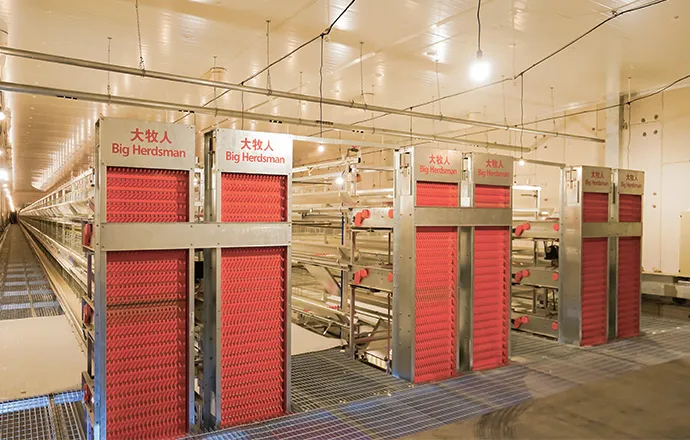
Modern egg collection systems are built to do more than just move eggs. They also help maintain hygiene, support smoother egg production, and reduce the risk of shell damage while eggs are transported. Big Herdsman’s product page highlights manual egg collection, single-hole auto nests, and group auto nests, showing that the right setup depends on flock size, house design, and production goals.
For many commercial farms, the real goal is not only to egg collect faster, but to create a more reliable workflow from the moment eggs are laid to the moment staff sort them for packing or hatching use. That is where an automatic egg collection system creates clear value.

As farm size grows, manual egg collection becomes a bottleneck. More manpower is needed. More walking is required. More human contact means more chances for dirt, cracks, and inconsistent handling. In a large poultry project, those small losses become big money over time.
That is why automatic egg collection is now widely preferred by professional operators. It reduces labor, lowers labor requirements, and creates a steadier routine inside the poultry house. In Big Herdsman’s breeder floor rearing solution, automatic feeding, nipple drinking, slat systems, and egg collection systems are integrated to support efficient hatching egg production and sustainable farm operation.
This matters even more for overseas customers running commercial projects across different climates. They are not buying one egg collection machine. They want a system that fits local layouts, supports long service life, and keeps operating costs under control.
An automatic egg collection system works best when it is part of a bigger solution. If the laying area is dirty, the water line leaks, or feed distribution is uneven, جمع البيض performance drops. That is why serious buyers care about full integration.
Big Herdsman’s breeder floor rearing solution combines egg collection systems, feeding systems, nipple drinking systems, and slat systems into one coordinated setup. The company states that these components are optimally integrated to maximize efficiency, improve productivity, and support sustainable operations.
The same logic appears in the company’s feeding and drinking pages. The feeding system emphasizes galvanized silos, controlled feed flow, imported augers, feed sensors, and reduced waste, while the drinking system uses double-layer filtration, pressure-regulating valves, and adjustable nipples for reliable water supply. When those systems work together, the automatic egg collection system performs better and the farm benefits from reducing labor costs, better hygiene, and lower operating costs overall.

Not every house needs the same design. A compact building with a moderate flock may prefer a single-hole nest. A larger breeder project may need a group auto nest with a modular design that fits traffic flow, building length, and production targets.
When choosing a system, ask these questions:
A factory-direct partner can customize the system and provide solution design based on climate, house dimensions, and labor conditions. That is especially important for overseas buyers, because one market may need corrosion resistance for humid weather, while another may focus on dust control or easier cleaning and daily maintenance.
Professional buyers in 80+ countries usually do not want a single egg collection device. They want a complete system partner. They need equipment that matches regional climate, chicken house size, utility conditions, labor availability, and long-term business plans.
That is where Big Herdsman Machinery Co., Ltd. has a strong position. The company focuses on complete automated farming systems, bringing together product R&D, manufacturing, system design, and service for livestock and poultry projects. This is attractive to buyers because it lowers project risk and makes expansion easier.
For these customers, the buying decision is not only about the price of an automatic egg collector. It is also about:
That is why a well-built automatic جمع البيض equipment package is often chosen over separate low-cost parts.
Manual collection depends on workers picking up eggs by hand. Automatic egg collection uses belts and conveyors to move eggs to a central point. It usually offers lower labor costs, less breakage, and more consistent hygiene.
Yes. Big Herdsman’s breeder floor rearing page shows that egg collection systems are part of its complete breeder solution, together with feeding, drinking, and slat systems for successful hatching egg production.
A properly selected egg collection belt receives eggs gently after laying and moves them with controlled speed. This lowers impact, helps reduce shell collisions, and supports better egg handling.
Yes. Commercial buyers often need systems tailored to different house lengths, climates, and management styles. A professional supplier can customize the layout and overall solution design to fit the project.
Yes. It reduces labor because staff no longer need to spend the same amount of time collecting eggs by hand. That is especially important in multi-house or large-scale operations.
Because real performance depends on setup, tuning, maintenance, and operator training. Long-term technical support helps protect uptime, keep the system automatically running well, and reduce project risk.
 Arabic
  English
  Spanish
  French
  Russian
  Portuguese
  Chinese