Is your poultry farm struggling with high mortality, low egg yields and rising labor costs?
These problems often stem from outdated cages, inefficient manure systems and poor climate control—leading to wasted feed, poor bird health and low return on investment.
A modern layer chicken cage system is a high-density poultry farm equipment solution that bundles cages, feeding & drinking, automatic egg collection and manure removal to optimize egg production, reduce labor and boost ROI.
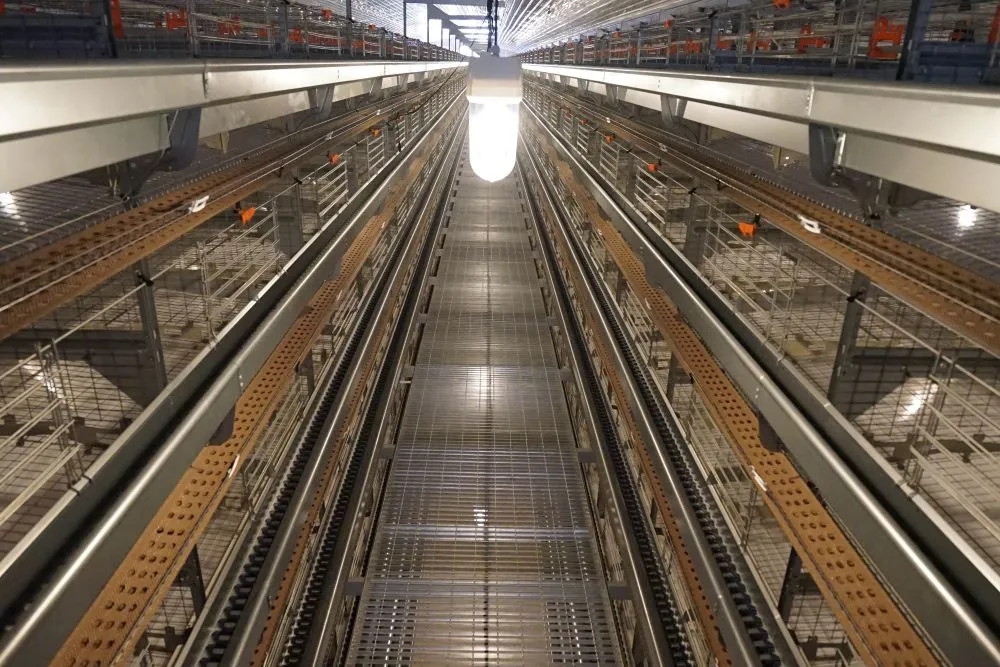
In a large-scale poultry farm, the cage system plays a central role in the reporting of productivity and cost. A proper battery cages layout ensures that laying hens are housed in a way that maximizes space, maintains health, and simplifies management.
From our work as a leading poultry equipment manufacturer we see that farms using layer cage systems consistently outperform floor-reared operations by achieving higher egg production and lower mortality.
Key features include:
“After we replaced our old cages with the new system, our layer house mortality dropped from 4.2% to 2.1% in six months.” – poultry producer case study
When you invest in a battery cage system for poultry, you’re equipping your poultry farm with the tools to optimize egg production from day one. The system supports better feed conversion, consistent bird condition and more reliable output.
Our poultry farm equipment integrates feeding, watering, ventilation and waste management, which means fewer interruptions and more uptime.

Some advantages:
By offering a full solution, our company (as a trusted poultry equipment supplier) helps farms shift from manual, labor-intensive models to efficient automated systems.
Selecting the right layer cage system supplier is as important as the system itself. Here’s what seasoned poultry farms demand:
Essential criteria:
We at our manufacturing plant hold certifications and a global footprint, serving farms in multiple countries. As an equipment supplier, we provide not just cages but full solutions including design, export and service.
Yes. A high-quality layer poultry farming equipment set-up pays off across several cost dimensions:
Example: A 100,000-bird layer farm replaced traditional housing with our layer cage system and achieved a 9-month ROI due to increased egg output and reduced feed & labor costs.
The cage for chicken layers must be built to last:

Quality frames mean fewer structural repairs and better long-term performance—key concerns for large-scale producers.
A professional layout for a chicken farm cages project must consider:
Our engineers produce tailored layout drawings, aligning cage system placement with house design, ventilation system, and automation components—ensuring every part of the poultry farm equipment chain works together.
Large farm operations require reliable support. A reputable poultry equipment manufacturer offers:
Installation supervision and on-site training
Spare parts availability and global logistics
Remote troubleshooting and software updates (for smart systems)
Preventive maintenance plans to keep the cage system running optimally
We support our clients globally and ensure each project—from Layer Cage System for sale to full automation—is backed by service excellence.
How many birds can a standard layer cage system hold?
Typical systems hold between 90–120 birds per cage unit depending on tier design and local regulations.
Can I upgrade from a floor system to a layer cage system?
Yes. Many large-scale farms retrofit existing houses with modern cage systems. Our team provides layout design and upgrade paths.
Is the system only for layers or also for pullets?
The system supports both. We supply pullet chicken cage systems and full layer cage transitions for complete lifecycle management.
What materials are used in the cage frames?
We use galvanized steel with corrosion-resistant finishes. This enhances durability, hygiene and long-term value.
How quickly can the system be installed and operational?
Installation time depends on farm size. For a 100,000-bird layer house, full setup usually takes 4–6 weeks including commissioning.

 English
  Spanish
  French
  Russian
  Portuguese
  Arabic
  Chinese