Running a profitable poultry business is no longer just about buying chicks and feed. Land, labor, energy, and biosecurity pressures are pushing farms to upgrade to modern poultry farm equipment that can deliver higher output with lower risk and more predictable costs.
Poultry farm equipment includes all the systems installed in a poultry house to feed birds, supply water, control climate, manage manure, collect eggs, and monitor performance. Choosing the right equipment, and the right manufacturer behind it, determines how stable your production will be over the next 10–15 years.
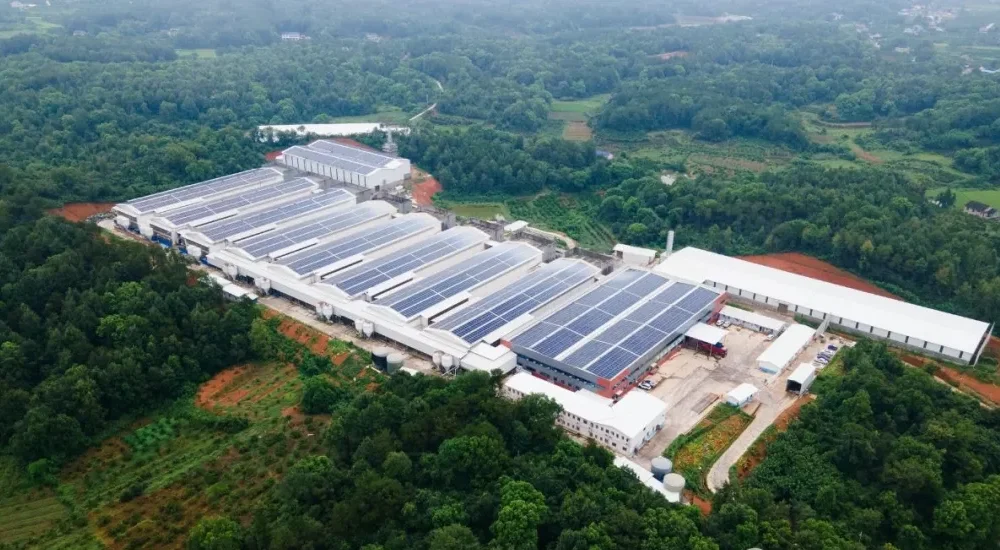
As Big Herdsman, a livestock breeding equipment manufacturing plant established in 2005, we provide complete solutions for poultry production, egg production, and aquaculture production. Our overseas clients are mainly large and medium-sized farms, integrators, engineering contractors, and agricultural technology service companies that demand high-quality, advanced equipment and reliable after-sales service.
In this in-depth guide, we will walk through every major part of poultry farm equipment, how they work together, and how you can plan a system that fits your market, climate, and investment budget.
1. What Is Poultry Farm Equipment and Why Does It Matter?
Poultry farm equipment is the full set of mechanical, electrical, and electronic systems used to support intensive production of broilers, layers, breeders, and other poultry. It turns a simple building into a controlled environment where:
- Birds receive feed and water in a uniform, efficient way
- Temperature, humidity, and air quality are kept in the optimal range
- Manure, dust, and harmful gases are managed safely
- Eggs are collected quickly and gently
- Data about the flock and environment can be monitored and analyzed
For a small backyard flock, basic tools may be enough. But for commercial farms handling tens or hundreds of thousands of birds, proper poultry farm equipment is the difference between stable profit and constant problems.
Key impacts of well-designed equipment:
- Higher survival rates and performance
- Better feed conversion ratio (FCR)
- Improved egg quality and uniformity
- Lower labor cost per bird
- Easier biosecurity and disease control
- Longer service life of buildings and assets
2. Main Types of Poultry Farm Equipment in Modern Houses
Modern poultry houses are complex systems. The main categories of poultry farm equipment include:
- Housing and cage systems
- Feeding equipment
- Drinking equipment
- Environmental control systems (ventilation, cooling, heating)
- Manure removal and waste management
- Egg collection and grading equipment
- Control systems and smart farming platforms
- Auxiliary equipment (lighting, weighing, biosecurity)
Let’s break these down.
3. Housing and Cage Systems: The Core of Poultry Production
3.1 Broiler and breeder house equipment
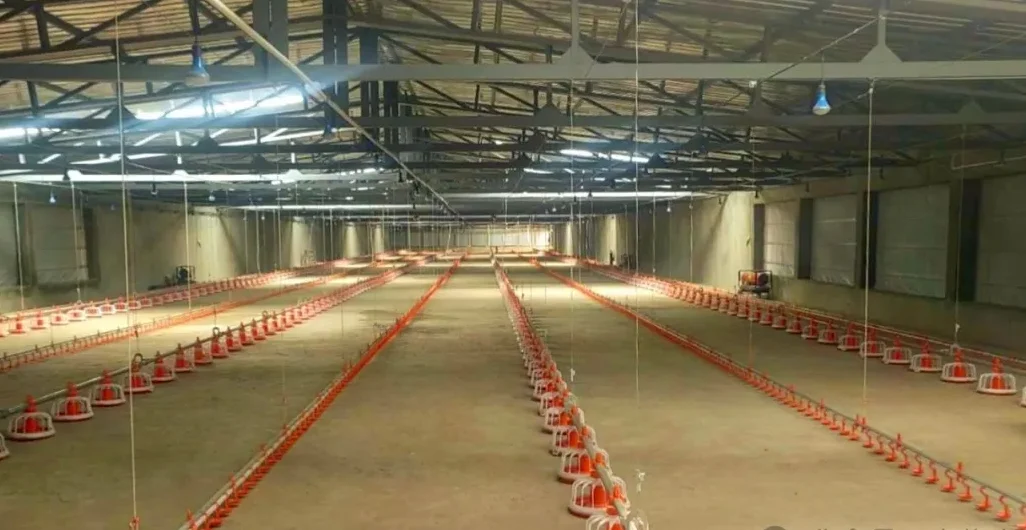
For broilers and breeders, equipment can be:
- Floor systems (with litter and pan feeders)
- Slat or raised floor systems
- Broiler cage systems for high-density production
Key equipment features:
- Durable structure with hot-dip galvanized steel
- Correct stocking density and floor design
- Easy access for birds to feed and drink
- Adequate headroom for ventilation and inspection
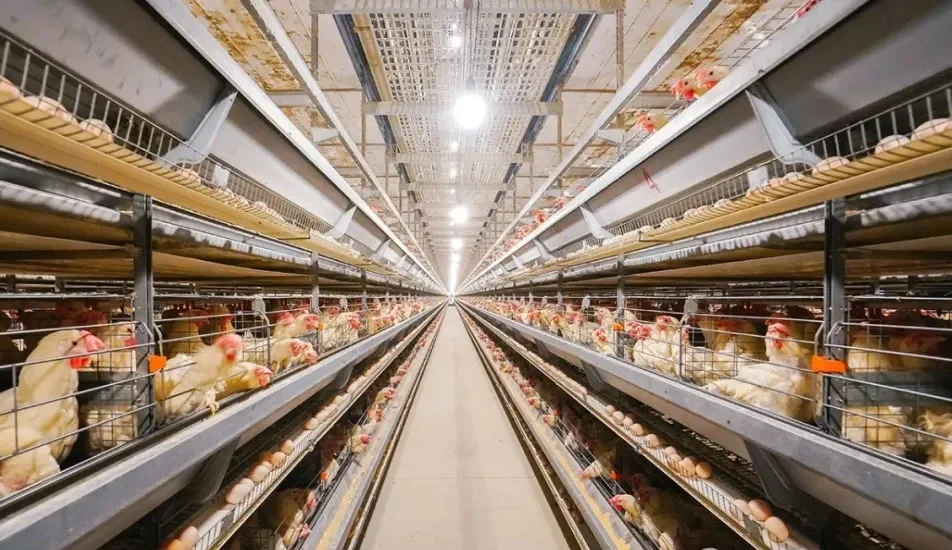
3.2 Layer cage systems
For commercial egg production, layer cages are central:
- Type A layer cages: A-frame structure, simpler and cost effective
- layer cages: High-density, multi-tier systems with manure belts
A good layer cage system integrates:
- Feed troughs
- Nipple drinking lines
- Sloped cage floors for egg rolling
- Egg belts and cross conveyors
- Manure belts or scrapers underneath
At Big Herdsman, we design both type A layer cages and H-type layer cage systems according to house height, land size, welfare standards, and your target production scale.
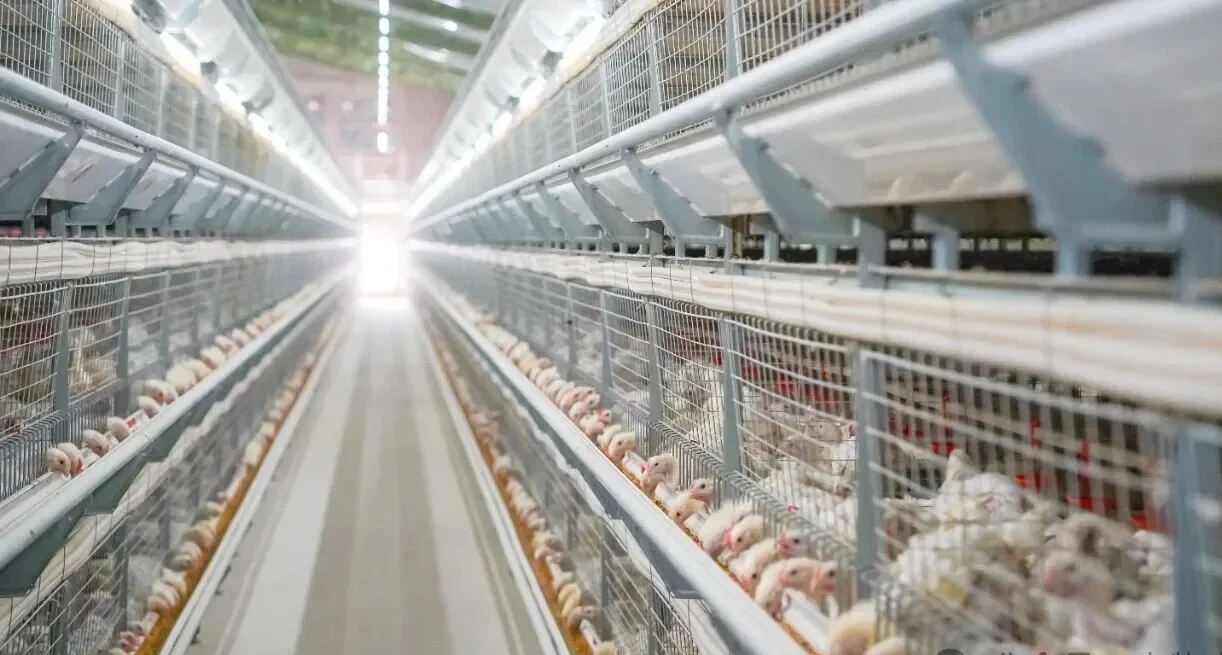
3.3 Poultry brooding cage systems
Brooding equipment is designed for day-old chicks:
- Fine mesh floors to protect chick legs
- Specially designed feed troughs and low nipples
- Localized heating and draft protection
- Easy access for inspection and vaccination
A poultry brooding cage system ensures strong, uniform chicks that enter the grow-out or layer phase with a good start.
4. Feeding Equipment: Consistent Nutrition with Less Waste
Feed is the biggest single cost in poultry farming. The right feeding equipment helps you:
- Deliver feed accurately and uniformly
- Reduce spillage and contamination
- Automate routine work
4.1 Silo and feed conveying system
Typical components:
- Galvanized or fiberglass silo for bulk feed storage
- Auger or chain conveying system from silo to house
- Distribution lines delivering feed to each row or pan
Good design prevents bridging and segregation of feed and protects feed quality from rain, insects, and rodents.
4.2 Feeding systems inside the house
For broilers and breeders:
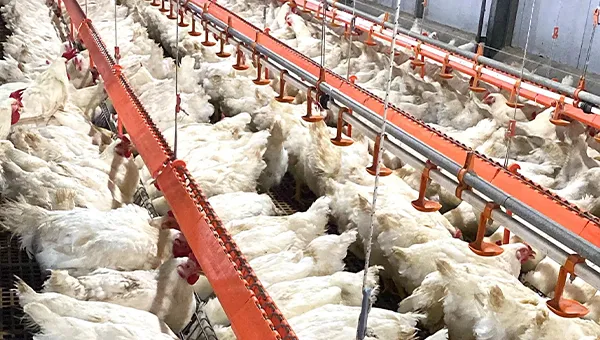
- Pan feeding systems with automatic filling
- Height-adjustable lines to match bird growth
- Anti-waste grills to reduce spillage
For layers in cages:
- Chain feeding systems along troughs
- Precise feed distribution from hopper
- Controlled feeding times to synchronize intake
An efficient poultry farm equipment package will allow you to adjust feed level, cycle, and timing according to birds’ age, genetics, and performance targets.
5. Drinking Equipment: Clean Water, Healthy Birds
Clean, accessible water is essential for all poultry. Modern poultry farm equipment for drinking includes:
- Main water line with pressure regulation and filtration
- Nipple drinking systems with drip cups
- Optional medicator for vitamins and treatments
- Flushing lines for biofilm removal
Key points:
- Correct nipple height and pressure for age group
- Enough nipples per bird to avoid competition
- Regular checking for leaks and blockages
Leaky or poorly adjusted drinkers quickly lead to wet litter, high ammonia, and disease problems. That is why, as a manufacturer, we pay special attention to nipple quality, sealing, and installation.
6. Environmental Control Systems: Ventilation, Cooling, and Heating
Climate is one of the most critical factors in poultry farming. Environmental control equipment keeps birds within their comfort zone and protects performance.

6.1 Ventilation systems
Main components:
- Exhaust fans (tunnel fans, side wall fans)
- Air inlets that direct fresh air to the ceiling for mixing
- Circulation fans (if needed)
- Minimum ventilation settings for cold weather
A properly designed system:
- Removes CO₂, ammonia, dust, and excess moisture
- Controls temperature distribution across the house
- Adjusts air speed for bird age and heat load
6.2 Cooling systems
In hot climates, poultry farm equipment often includes:
- Evaporative cooling pads along the side or end walls
- Water circulation systems and pumps
- Correct fan and pad sizing for tunnel ventilation
Cooling pads lower incoming air temperature and keep birds in their comfort range during hot seasons, reducing heat stress and mortality.
6.3 Heating systems
For brooding and cold weather:
- Direct-fired heaters
- Hot air furnaces
- Hot water systems with radiators or pipes
Combined with smart controllers, these systems maintain ideal temperature curves for chicks, pullets, broilers, or layers.
At Big Herdsman, environmental control is one of our core competencies: from fans and inlets to smart controllers and IoT-based smart farm net systems.
7. Manure Removal and Waste Management Equipment
Manure is both a challenge and a resource. Modern poultry farm equipment treats manure management as a system, not an afterthought.

7.1 Manure belt systems
In cage houses:
- Manure belts under each cage tier
- Drive motors and rollers to move manure out of the house
- Scrapers at the belt head for manure belt cleaning
- Cross conveyors to transfer manure to storage or transport
Regular belt cleaning:
- Reduces ammonia and odor
- Minimizes corrosion of cages and building
- Produces drier, more valuable fertilizer or biogas feedstock
7.2 Scraper systems and pits
In floor or A-frame cage houses, scraper equipment may pull manure from under the birds to outside the house.
7.3 External manure handling
Depending on your plan, manure can be:
- Stockpiled and composted
- Used for land application as organic fertilizer
- Fed into biogas digesters or drying systems
As a system supplier, we consider the whole manure flow when designing your poultry farm equipment package.
8. Egg Collection and Handling Equipment (Layer Farms)
For commercial layers, egg collection systems are a crucial part of poultry farm equipment.
Typical equipment includes:
- Sloped cage floors and egg trays
- Longitudinal egg belts on each tier
- Vertical or incline lifts to upper or lower levels
- Cross conveyors moving eggs to the egg room
- Optional counting, grading, and packing equipment
Good design focuses on:
- Gentle handling to reduce cracks
- Smooth transitions between belts and conveyors
- Easy cleaning and disinfection
This reduces labor and improves the percentage of saleable eggs, increasing income per hen housed.
9. Control Systems and Smart Farming Technology
Modern poultry operations require more than manual switches. Smart control equipment brings everything together.

9.1 Environmental controllers
- Central controllers for temperature, humidity, and ventilation
- Programmable curves for brooding and production phases
- Alarm systems for power failure, extreme temperatures, and fan issues
9.2 Smart farm platforms and IoT
Big Herdsman can integrate:
- Smart hardware (controllers, sensors, meters)
- Smart farm net platforms to link multiple houses and farms
- Remote monitoring and control via PC or mobile app
- Data logging for production and environment
Benefits:
- Faster problem detection
- Better decision-making based on real data
- More consistent performance across flocks and houses
For large integrators and engineering contractors, this level of poultry farm equipment is now standard rather than optional.
FAQs About Poultry Farm Equipment
What is the most important poultry farm equipment to invest in first?
For new farms, the core systems are housing (cages or floor structures), feeding, drinking, and ventilation. If you have a limited budget, start with reliable poultry farm equipment in these areas, then add automation (egg collection, manure belts, smart controls) step by step.
Can old poultry houses be upgraded with new equipment?
Yes. Many projects involve upgrading existing houses with modern feeding systems, nipple drinkers, better ventilation, and even new cage systems. A professional manufacturer can evaluate your current buildings and design poultry farm equipment that fits within structural limits.
How long does poultry farm equipment typically last?
With good materials and proper management, major equipment (cages, structures, silos) can last 10–15 years or more. Fans, motors, and electronic components may require replacement earlier. Regular maintenance and correct environmental control extend equipment life.
Is fully automatic equipment always the best choice?
Not always. The best level of automation depends on labor cost, staff skill level, and farm size. For some markets, semi-automatic systems provide the right balance of cost and performance. We usually propose several options and help clients choose based on their business model.
How do I know if a poultry farm equipment manufacturer is trustworthy?
Look for:
- Real factory, not only trading company
- Clear project references and photos/videos
- Transparent technical specifications and drawings
- Professional communication and detailed quotations
- Willingness to provide layout and engineering support
Visiting the factory or talking to existing customers is often the best way to confirm reliability.
Key Takeaways: Building a Strong Poultry Farm with the Right Equipment
- Poultry farm equipment is the complete system that feeds, waters, houses, and protects your birds, and manages your environment, manure, and eggs.
- High-quality, well-matched equipment improves survival rate, FCR, egg quality, labor efficiency, and long-term profitability.
- Core systems include housing/cages, feeding, drinking, environmental control, manure handling, and smart control platforms.
- Choosing a strong manufacturer with integrated design, production, and service is as important as the equipment itself.
- A step-by-step planning process—capacity, house design, equipment configuration, budget, and ROI—makes your investment safer.
If you are planning a new poultry project or upgrading existing houses, working with an experienced manufacturer like Big Herdsman can help you design and deliver a complete poultry farm equipment solution that supports your business growth for years to come.

 English
  Spanish
  French
  Russian
  Portuguese
  Arabic
  Chinese