In today’s poultry industry, profit no longer comes from cheap labor and simple houses. Feed prices, energy costs, disease risks, and environmental regulations are all rising. To stay competitive, more and more farms are turning to poultry automation systems to produce more birds – with fewer people, more control, and less risk.
Poultry automation systems combine mechanical equipment, sensors, controllers, and software to automate key tasks in broiler, layer, breeder, and turkey houses. Instead of relying on manual work and guesswork, you rely on data, precise control, and integrated systems.
As Big Herdsman, a professional livestock breeding equipment manufacturer established in 2005, we provide complete poultry automation solutions for poultry production, egg production, breeder farms, and aquaculture to global integrators, large farms, engineering contractors, and agricultural technology service companies.
This article explains, in a popular-science and easy-to-understand way, what poultry automation systems are, how they work, their main components, and how they can help your farm become more efficient, sustainable, and profitable.
1. What Are Poultry Automation Systems?
Poultry automation systems are integrated solutions that use machines, sensors, and computer control to handle routine tasks in poultry houses, such as:
- Feeding and drinking
- Egg collection
- Ventilation, cooling, and heating
- Lighting programs
- Manure removal
- Data collection and alarms
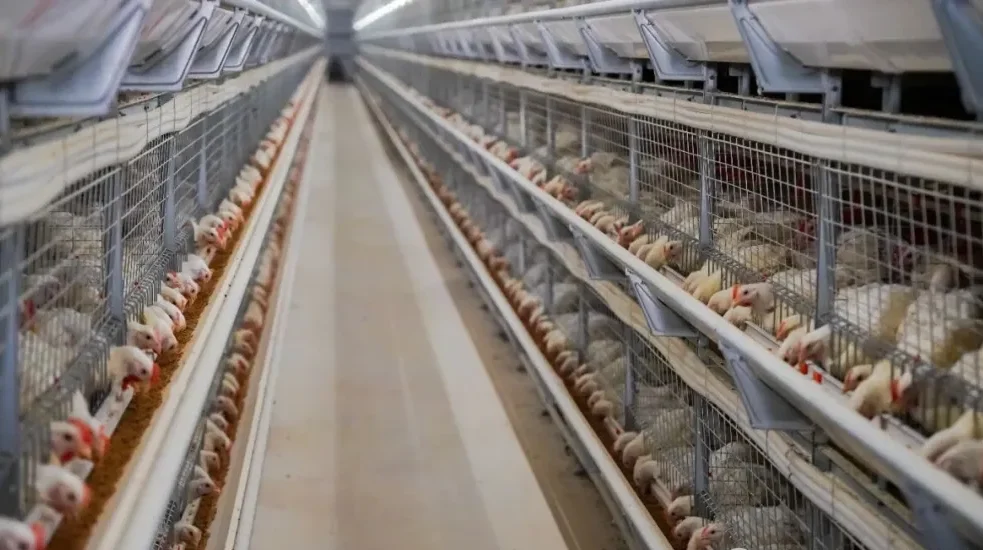
Instead of farm workers adjusting fans by hand, carrying feed, or checking each house many times per day, an automated system monitors the environment and flock and makes adjustments automatically based on pre-set parameters.
You can think of a poultry automation system as the “central nervous system” of a modern poultry farm: it connects all equipment, collects data, and sends commands, so that the house runs smoothly 24/7 with less human intervention.
2. Why Are Poultry Automation Systems Becoming So Important?
Commercial poultry is a low-margin, high-volume business. Small improvements in performance or cost have a big impact on yearly profit. Poultry automation systems help in several key areas:
2.1 Labor savings and reliability
- Fewer workers are needed to manage the same number of birds.
- Critical tasks (like minimum ventilation at night or feeding times) are done on schedule, without forgetting or delay.
- One skilled manager can oversee multiple houses through a central control panel or smartphone app.
2.2 Better bird performance
Automated systems can:
- Keep temperature and humidity inside the optimal comfort zone more consistently.
- Deliver feed and water evenly and on time.
- Maintain good air quality (CO₂, ammonia, and dust) with well-designed ventilation programs.
This results in:
- Higher growth rates and better feed conversion (for broilers).
- More eggs and better shell quality (for layers).
- Better fertility and hatchability (for breeders).
2.3 Improved biosecurity and environmental control
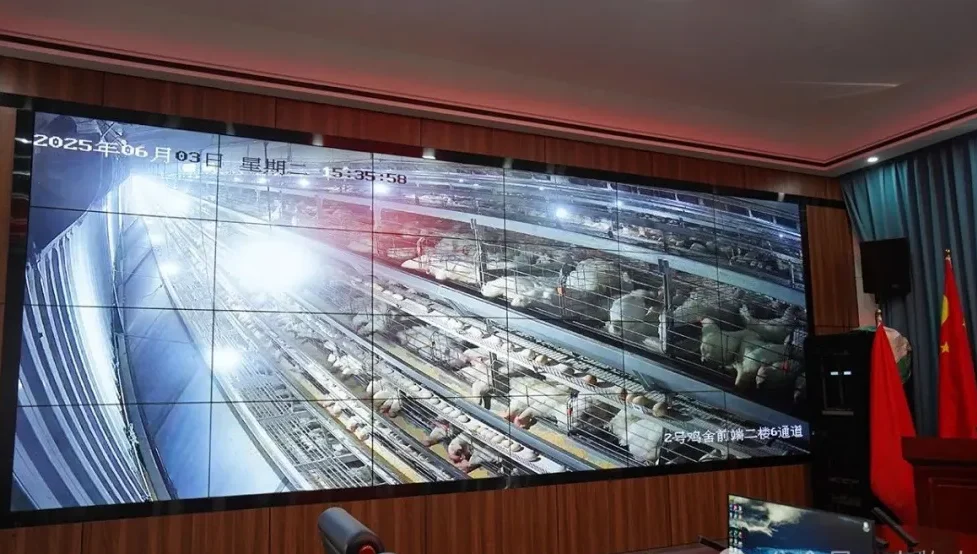
Poultry automation systems reduce:
- The number of times people need to enter the house, which lowers the risk of bringing in diseases.
- Contact between workers and birds (and between houses), helping with biosecurity.
At the same time, automation supports better manure handling and precise minimum ventilation, which reduces odor, ammonia, and environmental complaints.
2.4 Data-driven decisions
With sensors and smart controllers, farms can:
- Record temperature, humidity, negative pressure, feed intake, water consumption, egg production, and more.
- Analyze trends over time and compare flocks or houses.
- Adjust management based on real data instead of only experience.
This is the foundation of smart poultry farming, where data helps you find small hidden problems before they become big losses.
3. Main Types of Poultry Automation Systems
Modern poultry houses usually combine several automation modules. The most common are:
- Automatic feeding systems
- Automatic drinking systems
- Automatic ventilation and climate control systems
- Automatic egg collection systems (for layer and breeder farms)
- Automatic manure removal systems
- Lighting and timing control systems
- Data, monitoring, and alarm systems (IoT and smart farm platforms)
Let’s go through each one.
4. Automatic Feeding Systems
Feed is the biggest cost in poultry production. Automatic feeding systems help control this cost and improve performance.
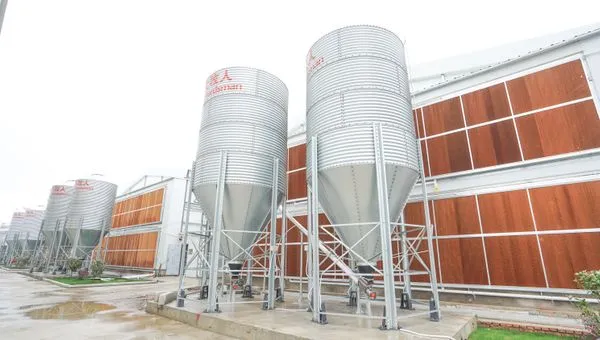
4.1 Silo and feed conveying
Core components:
- Feed silos (galvanized or fiberglass) for bulk storage
- Auger or chain conveyors that bring feed from silo to the poultry house
- Distribution hoppers and lines connected to pans or troughs
Automation benefits:
- Feed arrives in the house without manual bags.
- Less risk of contamination from rodents or rain.
- Feed can be delivered at programmed times, even at night or early morning.
4.2 In-house feeding systems
For broilers and breeders:
- Pan feeding systems with automatic level control
- Height-adjustable lines to match bird growth
- Even distribution from the first to the last pan
For layers in cages:
- Chain feeding systems along feed troughs
- Central hoppers with motors to move feed around the house
- Option to control cycle speed and number of feedings per day
Automation ensures that all birds get feed at the same time, supporting better uniformity and reducing stress and fighting.
5. Automatic Drinking Systems
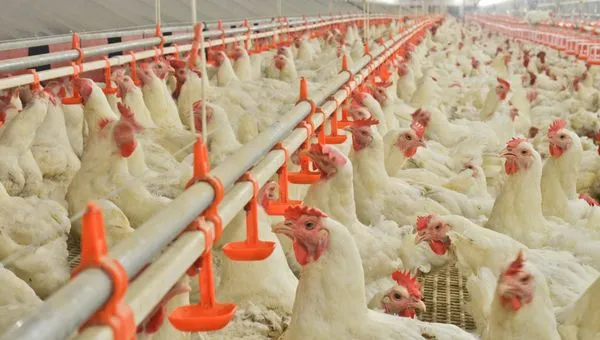
While drinking systems themselves are simple, automation and smart design make them more reliable.
Key elements:
- Main water line with pressure regulator and filter
- Nipple drinker lines with drip cups
- Automatic flushing system (timed or controller-based)
Advantages:
- Stable water pressure and flow to each nipple.
- Programmable flushing cycles to reduce biofilm and bacteria in lines.
- Integration with medicators to deliver vitamins or treatments accurately.
Poultry automation systems can monitor daily water consumption; sudden changes are an early signal of illness or stress in the flock.
6. Automatic Ventilation and Climate Control
Climate control is where poultry automation systems show their full power.
6.1 Components of an automated climate control system
- Exhaust fans (tunnel fans, side-wall fans)
- Air inlets with actuators (motors)
- Cooling pads and water circulation units
- Heaters for brooding and winter
- Temperature, humidity, and static pressure sensors
- Central environmental controller
6.2 How automatic climate control works
- Sensors measure temperature, humidity, static pressure, sometimes CO₂ and ammonia.
- The controller compares these values with the set points you have programmed.
- It adjusts:
- Fan speed and number of running fans
- Air inlet opening
- Cooling pad pump operation
- Heater output
- The system reacts to changes in outdoor temperature, bird heat production, and house conditions in real time.
For example, on a hot afternoon, the controller may switch the house into tunnel ventilation mode and activate cooling pads. At night, it returns to minimum ventilation with only a few fans to maintain air quality without chilling birds.
6.3 Benefits for production
A stable, automated climate system:
- Reduces heat stress in hot climates.
- Prevents cold drafts and chilling, especially for chicks.
- Keeps litter or manure belts drier and reduces ammonia.
This leads directly to better growth, fewer diseases, and higher overall performance.
7. Automatic Egg Collection Systems
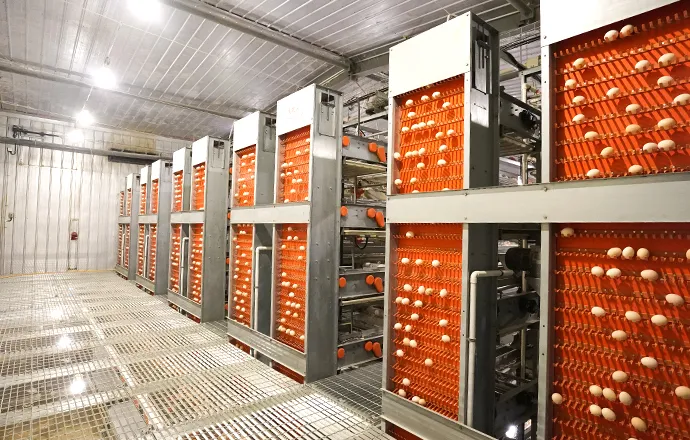
In commercial layer and breeder farms, automatic egg collection is a key part of poultry automation systems.
7.1 In-house egg collection
Equipment includes:
- Sloped cage floors or nest floors so eggs can roll onto belts.
- Egg belts along each row or tier, driven by motors.
- Vertical lifts or elevators to bring eggs from tiers to a main belt.
- Cross conveyors moving eggs to the egg room.
Automation reduces:
- Manual carrying of eggs.
- Breakage and hairline cracks.
- Time eggs spend in the house before reaching the egg room.
7.2 Egg room and grading
Further automation can include:
- Egg counting systems to track production by house or flock.
- Grading and candling equipment.
- Gentle conveyors to packing machines or trays.
For breeder farms, where each hatching egg has high value, automatic egg collection systems also help protect shell quality and cleanliness, which are vital for hatchability.
8. Automatic Manure Removal Systems
Manure management is a major environmental and health issue. Automated manure removal is common in modern poultry houses.
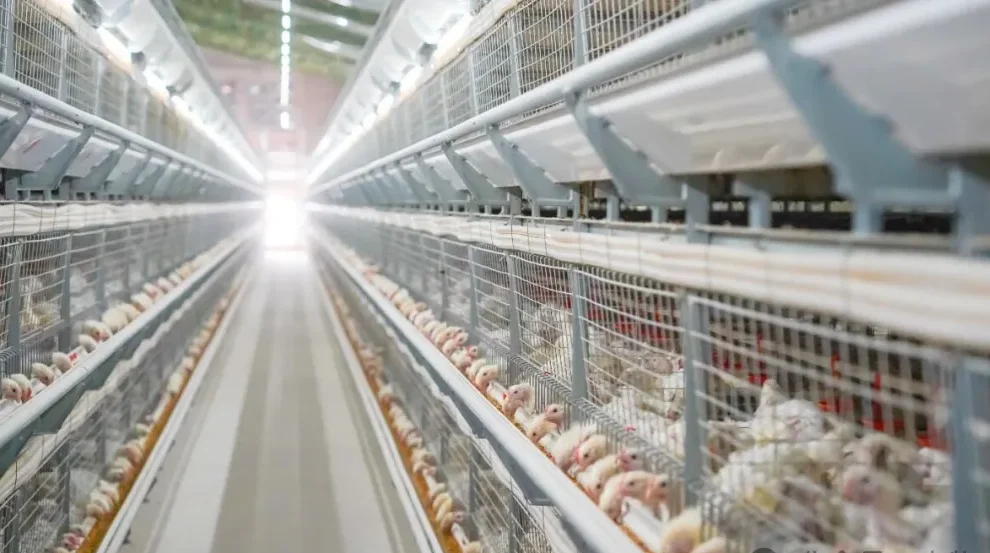
8.1 Manure belt systems (in cage houses)
Core features:
- Manure belts under each cage tier.
- Drive motors and rollers at the house end.
- Scrapers for manure belt cleaning.
- Cross conveyors to move manure outside the house.
Advantages:
- Frequent manure removal keeps air fresher.
- Lower ammonia and humidity around birds.
- Easier storage, composting, or further processing.
8.2 Scraper systems (in floor houses)
In floor houses:
- Longitudinal scrapers can drag manure and litter to the end of the house.
- Automation allows regular scraping without manual labor.
Integrated manure systems are often linked to the controller, so belt runs or scraper cycles can be timed together with ventilation to manage odor and dust.
9. Lighting and Timing Control Systems
Lighting strongly influences:
- Feeding behavior
- Growth rate
- Sexual maturity and laying curves
Poultry automation systems include lighting controllers that can:
- Program day length and light intensity for each age.
- Provide smooth dimming to avoid sudden changes that scare birds.
- Use different programs for broilers, layers, and breeders.
With a good lighting control system, you can follow scientific light programs recommended by genetic companies and adapt them to your local conditions.
10. Smart Monitoring, Alarms and IoT Platforms
The newest layer of poultry automation systems is data and connectivity.
10.1 Central controllers and house panels
Each house usually has a local controller with a display or touchscreen. It shows:
- Current temperature, humidity, static pressure
- Fan status and speed
- Heater, cooling pad, and light status
- Alarm history
Farm staff can adjust set points and schedules at the panel.
10.2 Smart farm platforms and remote access
More advanced farms connect all controllers to a central farm management platform, sometimes called Farm Net or Smart Farm:
- Houses, barns, and even different sites send data to a central server.
- Farm managers, engineers, or integrator headquarters can see real-time data from anywhere.
- Alarms (power failure, extreme temp, fan failure) can be sent via SMS, app notification, or email.
Benefits:
- Faster reaction to problems (for example, a fan failure at night).
- Better comparison between houses and flocks.
- Easy reporting for integrators and company management.
As a high-tech enterprise, Big Herdsman integrates smart controllers, sensors, and IoT platforms with our poultry automation systems so that modern farms can move from manual to data-driven management.
FAQs About Poultry Automation Systems
Are poultry automation systems only for very large farms?
No. While large farms benefit the most, medium-sized farms can also gain strongly from automation. Many systems are modular, so you can start with automatic feeding and ventilation, then add egg collection, manure belts, or smart farm platforms later.
Will automation replace all workers?
No. Automation reduces heavy and repetitive tasks, but you still need skilled people for management, monitoring, health checks, and decision-making. In practice, one person can manage many more birds with automation than without it.
Is it difficult to learn to use automatic controllers?
Modern controllers use clear screens and menu systems. With proper training from the manufacturer, most farm managers learn to operate them quickly. Many systems also offer remote support, where technicians can help you adjust settings.
How long does it take for poultry automation systems to pay for themselves?
Payback time depends on labor cost, energy prices, performance improvement, and farm scale. For many commercial farms, payback can come in a few years through better feed conversion, higher survival and production, and lower labor cost.
Can I upgrade my existing houses with automation?
Yes. Many projects retrofit older houses with new ventilation, feeding, and control systems. The design must consider your existing structure, but it is often possible to automate step by step without building entirely new houses.
Key Takeaways: Why Poultry Automation Systems Matter for Your Future
- Poultry automation systems integrate feeding, drinking, climate control, egg collection, manure removal, lighting, and data management into a coordinated whole.
- They help you reduce labor dependence, stabilize performance, protect animal welfare, and adapt to rising costs and stricter regulations.
- Smart controllers and IoT platforms turn your farm into a data-driven operation, where decisions are based on real numbers, not just experience.
- Success with automation depends not only on equipment, but also on design, training, maintenance, and strong technical support.
- Partnering with an experienced manufacturer and system integrator like Big Herdsman gives you the tools and support to build a modern, efficient, and competitive poultry operation.
If you are planning a new farm or upgrading existing houses, now is the right time to seriously evaluate poultry automation systems as the foundation for your next decade of growth in the poultry industry.

 English
  Spanish
  French
  Russian
  Portuguese
  Arabic
  Chinese