Broken eggs, rising labor costs, and inefficient egg handling still challenge many poultry farms. These problems don’t just slow production—they directly affect egg quality and profits. The solution is clear: a reliable конвейерная система для яиц that helps farms automate, protect, and convey eggs smoothly from nest to packing.
An egg conveyor system is a specialized conveyor belt designed to transport eggs safely and efficiently within a poultry farm. It connects cages or nests to central egg collection and packing stations, helping farmers automate egg collecting, reduce breakage, and improve productivity across both small farms and large-scale operations.

. конвейер для яиц is a core part of modern egg handling systems. It moves eggs gently from the hen area—whether cage, aviary, or automatic nests—to a central egg point. Instead of workers carrying trays by hand, the conveyor system runs continuously.
In practical terms, this means eggs leave the nest almost immediately after laying. That speed reduces exposure to dust, manure, and accidental damage. For any poultry farm focused on egg production efficiency, this system in poultry operations has become essential rather than optional.
From my experience working with integrated farm projects, farms that adopt a structured egg conveyor system gain far better control over egg transport and daily operations.
Eggs are fragile. A well-designed ленточный конвейер для яиц focuses on smooth egg movement, not speed alone. The belt system runs steadily, ensuring eggs do not collide or stack unevenly.
Key design ideas include:
1.Smooth egg contact surfaces made from polypropylene
2.Carefully controlled width and speed
3.Stable drive units that avoid vibration
This approach helps minimize damage to the eggs while still conveying large volumes. When eggs move calmly, egg quality stays consistent, and farmers see fewer cracked shells at packing stations.
Manual egg collecting depends heavily on labor. As farms grow, labour costs rise quickly. That’s why many operations now automate egg movement.
An automatic система сбора яиц allows farms to:
Reduce daily labor needs
Improve operational consistency
Collect eggs at predictable intervals
By automating this process, farmers can focus on health, feeding, and management instead of repetitive transport tasks. This shift is happening across the egg industry, from small farms upgrading step by step to large-scale operations built fully automated from day one.

Manual collecting still exists, but it has limits. Workers carry trays, walk long distances, and often handle eggs multiple times. Each step increases risk.
With an egg conveyor:
1.Eggs move once, not repeatedly
2.Sorting and grading can begin earlier
3.Transporting eggs becomes part of a continuous flow
In real projects, farms switching from manual methods often report fewer handling errors and better daily productivity. The conveyor belt simply removes unnecessary steps.
Egg quality is not just about shell strength. It also depends on how quickly and gently eggs move after laying. A reliable egg conveyor system reduces breakage by keeping eggs aligned and stable.
Because the eggs travel directly from nest to central egg points, there is less chance of sudden drops or collisions. This smooth egg movement protects the shell and helps maintain internal quality as well.
Reducing breakage by even a few percent can significantly increase profits over time.
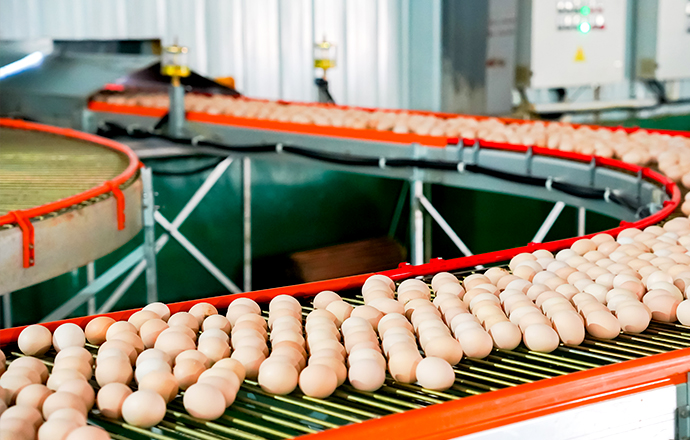
Modern farms rarely stop at transport alone. Egg conveyors often connect directly to packing systems, grading machine lines, or a grader that sorts eggs by size.
This integration allows eggs to:
1.Move from collection to sort and grade seamlessly
2.Enter trays automatically
3.Flow into packing stations without manual transfer
When egg handling systems work together, the entire line becomes more reliable egg processing infrastructure rather than disconnected machines.
A high-quality egg conveyor depends on materials and structure. From supplier projects I’ve seen, the most durable solutions use:
1.Galvanized steel side profiles for strength
2.Height-adjustable support for alignment
3.A modular structure that allows future expansion
These systems are designed to handle daily use in demanding environments. Durability and longevity matter, especially for farms planning long-term growth.
The initial investment in an egg conveyor may seem significant, but the long-term return is clear. By lowering labour costs, reducing egg loss, and improving productivity, most farms see measurable ROI within a few production cycles.
More importantly, conveyors support operational stability. That reliability allows farms to scale egg production without proportionally increasing staff or complexity.

Selecting the right supplier matters as much as the machinery itself. Farms need a partner who understands egg handling, poultry workflows, and real-world challenges.
As a manufacturer, Big Herdsman Machinery Co., Ltd. focuses on fully automated farming solutions, integrating egg conveyor systems with cage, egg collecting, and environmental control designs. With experience across 80+ countries, the company tailors systems to local climates, layouts, and production targets.
A reliable supplier offers not only machinery but also planning, installation guidance, and after-sales support—critical for proven reliability over many years.
How many eggs can an egg conveyor transport per hour?
Capacity depends on design and speed, but modern systems can handle tens of thousands of eggs per hour while maintaining smooth egg movement.
Is an egg conveyor suitable for small farms?
Yes. With adaptable and modular designs, egg conveyors work for small farms and can expand as production grows.
Does an egg conveyor reduce damage to the eggs?
Yes. Gentle conveying and fewer handling steps significantly reduce breakage and damage to the eggs.
Can egg conveyors connect to grading and packing stations?
Absolutely. Most systems integrate directly with graders, trays, and packing stations for fully automated flow.
How long does an egg conveyor system last?
With durable materials and proper maintenance, systems offer strong durability and longevity, often running reliably for many years.
Across conveyors in the world, egg conveyors stand out as one of the most practical upgrades for poultry operations. They improve egg transport, protect egg quality, and support automation without unnecessary complexity.
For farms aiming to optimize efficiency, minimize losses, and build scalable egg production, a well-designed egg conveyor system is no longer just equipment—it’s a foundation for sustainable growth.
If you’re planning to upgrade or build a new poultry farm, working with an experienced machinery partner can help ensure your egg handling solution is reliable, adaptable, and built for the future.

 Russian
  English
  Spanish
  French
  Portuguese
  Arabic
  Chinese